
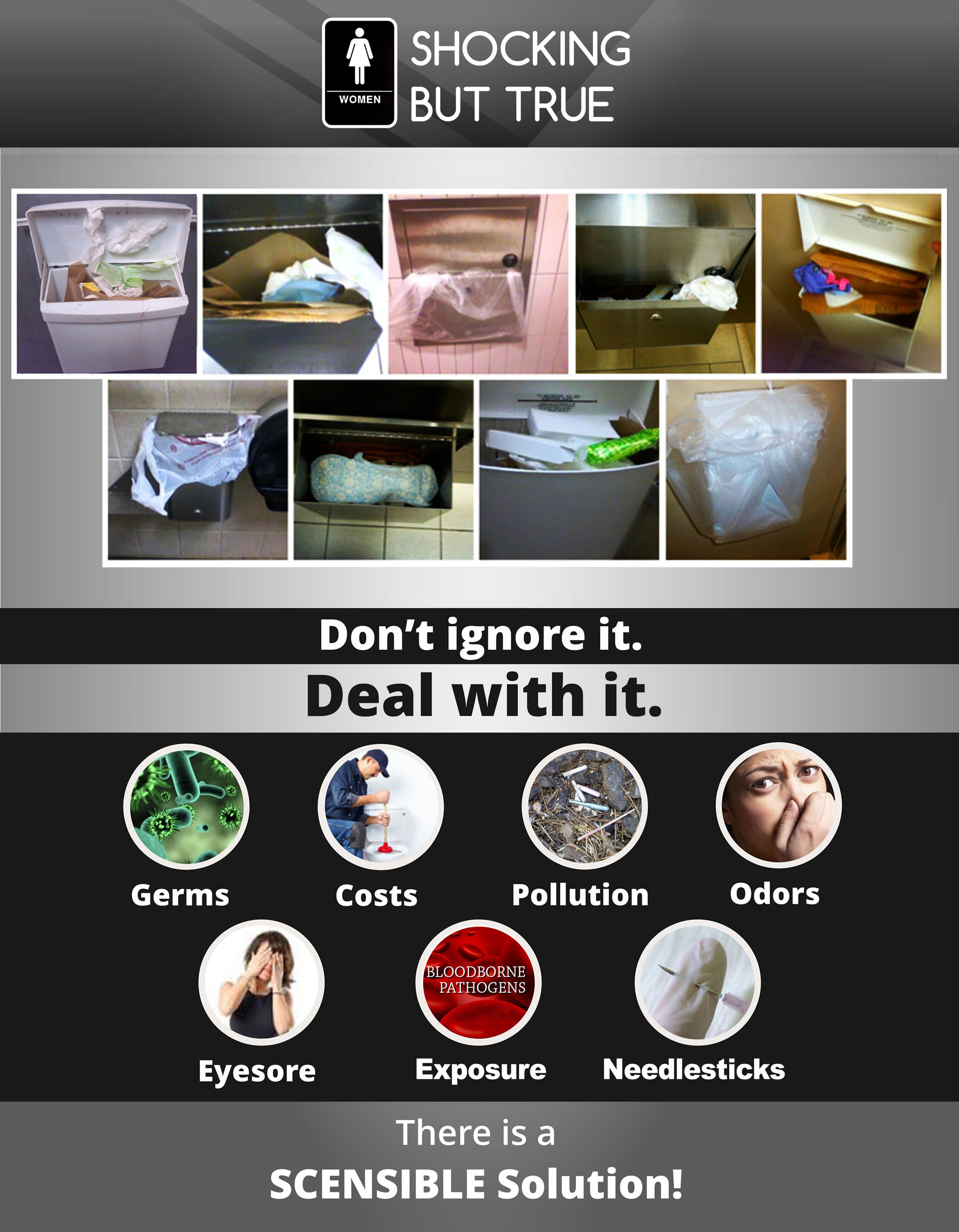
the Problems
GERMS, viruses & blood borne pathogens
The #1 contaminated spot in the restroom coated from TOILET PLUMES* is the outside surfaces of the stall menstrual product waste receptacle
Interior surfaces have 20,000 times more microbial contamination than a public toilet seat
Risk of exposure to contagious viruses and blood borne pathogens (HEP B, C, and HIV) for restroom users and cleaning staff, some in a dried state up to a week
*TOILET PLUMES: the dispersal of microscopic particles containing C diff, E coli, SARS, even Covid, as a result of flushing a toilet. The particles coat stall fixtures with potentially infectious viruses, remaining contagious when touched for days. Dr Charles Gerba, Microbiologist
PLUMBING COSTS
45% of users choose to flush tampons down the toilet
Tampons continue to absorb and expand to about 10 times causing toilet and pipe blockages
Clogged toilets lead to unscheduled maintenance calls, costly repairs and time-consuming cleanups
30% would rather flush their pads and tampons than come into contact with an unsanitary, often overflowing wall-mounted metal waste box*
When no waste disposal bin is offered in the stall, menstruators are most likely to flush pads (15%) and tampons (38%)*
*Citron Hygiene
ODORS
Moistness of soiled products, inside lidded waste receptacles or garbage cans, are a perfect environment for odor-causing bacterial growth that emits a repulsive smell
NEEDLESTICKS
Needles and other sharps that can cut the skin, are commonly discarded into stall waste receptacles and can create a cut in the skin which allows contact between blood, or fluids See what happened at several Starbucks.
EYESORES
Unwrapped soiled menstrual products left in stall disposal receptacles can be unpleasant for other restroom users and for the staff responsible for emptying and cleaning them.
POLLUTION
Highly absorbent and stringy material such as tampons, pads and wipes; never disperse or disintegrate in septic or sewer systems.
Menstrual waste prevents sewage from flowing through municipal sewer systems, causing blockages in sewer pipes, sewage pumps and leads to backups as well as raw sewage overflows into water systems.
Marine animals digest plastic pieces such as tampon applicators.
The Solution
Protect Health and Safety
Scensibles® bags help reduce the risk of exposure to potentially infectious blood and body fluids, including bloodborne pathogens. By securely containing menstrual waste, Scensibles solutions protect custodial staff and others whose job responsibilities include restroom maintenance, making disposal safer, more hygienic, and less hazardous for everyone.
Prevent Plumbing Damage and Water Pollution
Flushing period products can clog pipes, damage wastewater systems, and cause sewage overflows. Scensibles® provide a simple, responsible alternative—designed for clean disposal in the trash, not the toilet. Proper use helps prevent plumbing issues and reduces pollution in lakes, rivers, and oceans.
Reduce Odors and Improve Experience
Scensibles® bags are embedded with a fresh fragrance and an antimicrobial additive that inhibits odor-causing bacterial growth. The personal disposal bags and liner bags conceal waste and keeps it out of view—supporting a more hygienic environment and preserving user privacy in shared bathrooms and public restrooms.
